
Day Thirteen: Games That Matter, and the Ones That Won't
This is the last day. A majority of the group stage matters. From tomorrow onwards, predicting will be hard.

While ten of the twelve groups sit and wait for their final round, the last two, Groups K and L, finally play their second games. Four matches, but every one of them still means something. That is worth saying out loud, because it is about to stop being true for a lot of teams, and that is what I want to get into today.
Yesterday
The last of the second-round games went almost entirely to form. France brushed Iraq aside 3-0, Norway edged a lively 3-2 against Senegal, Argentina saw off Austria 2-0, and Algeria recovered to beat Jordan 2-1. Four favorites, four wins. The cleanest day the tournament has handed us in a while.
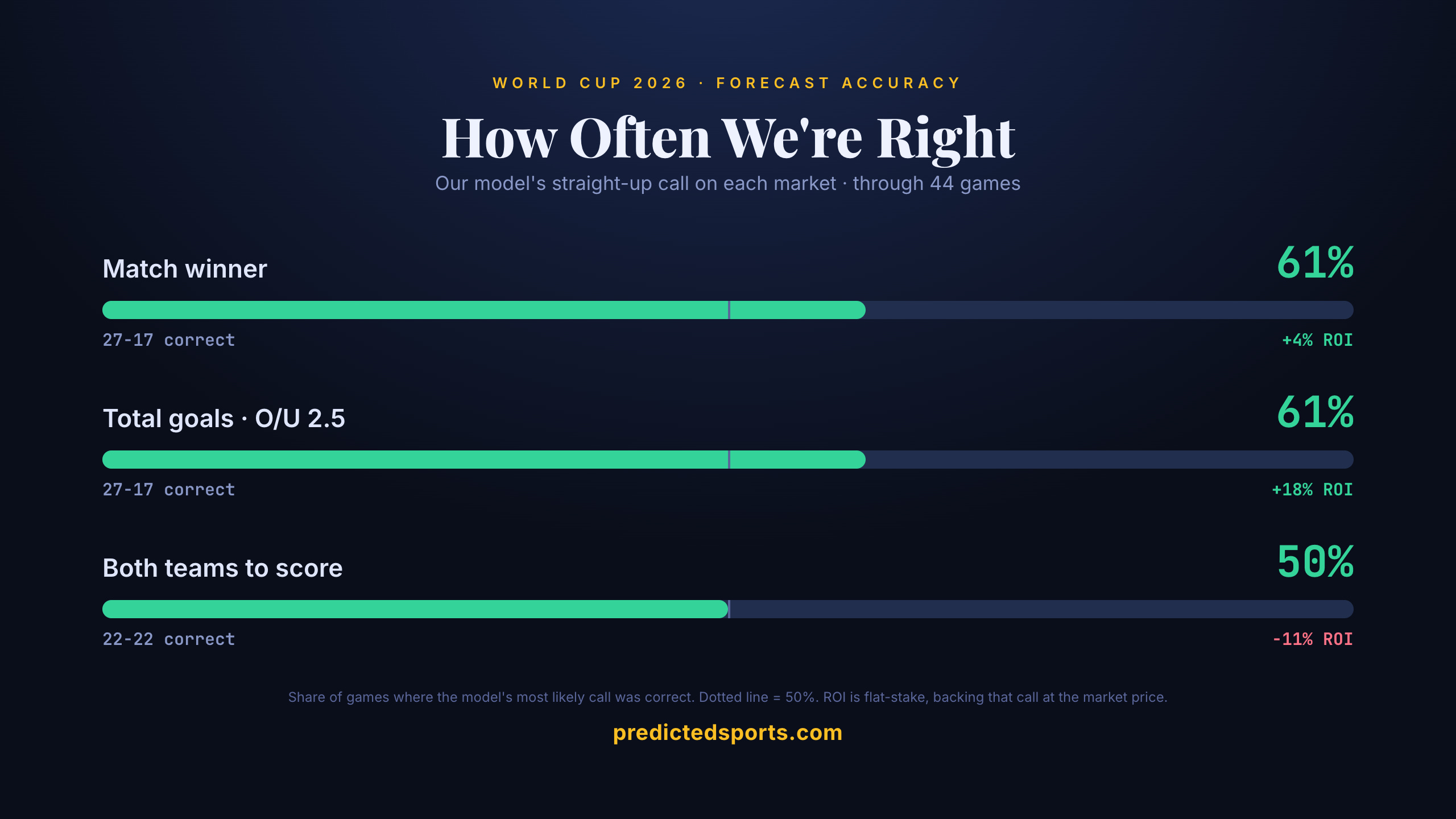
Rather than live and die by one bet, it is worth stepping back and looking at the whole board. If you had simply backed our model’s call on every game so far, every winner, every over or under, every both-teams-to-score, here is where you would stand after 44 matches. On match winners we are 27 and 17, a 61 percent hit rate, and at the prices that is a small profit, a touch over 4 percent. On totals we are also 27 and 17, but those calls land at better odds, so that line is up around 18 percent, and it is comfortably our strongest market. Both teams to score is the one to leave alone: 22 and 22, a literal coin flip, and 11 percent in the red. The shape of that is the thing we keep running into. The model reads the rhythm of a game well, the winner and especially the goals, and it has very little feel for which side actually puts them in.
The thing the model cannot see
Here is something our model does not know, and never has: whether a game matters. It will price Brazil against Scotland exactly the way it prices a cup final, with the same ratings and the same math, even when one side is already through and resting legs and the other has nothing left to play for. The model forecasts who is better. It has no feel for who is actually trying.
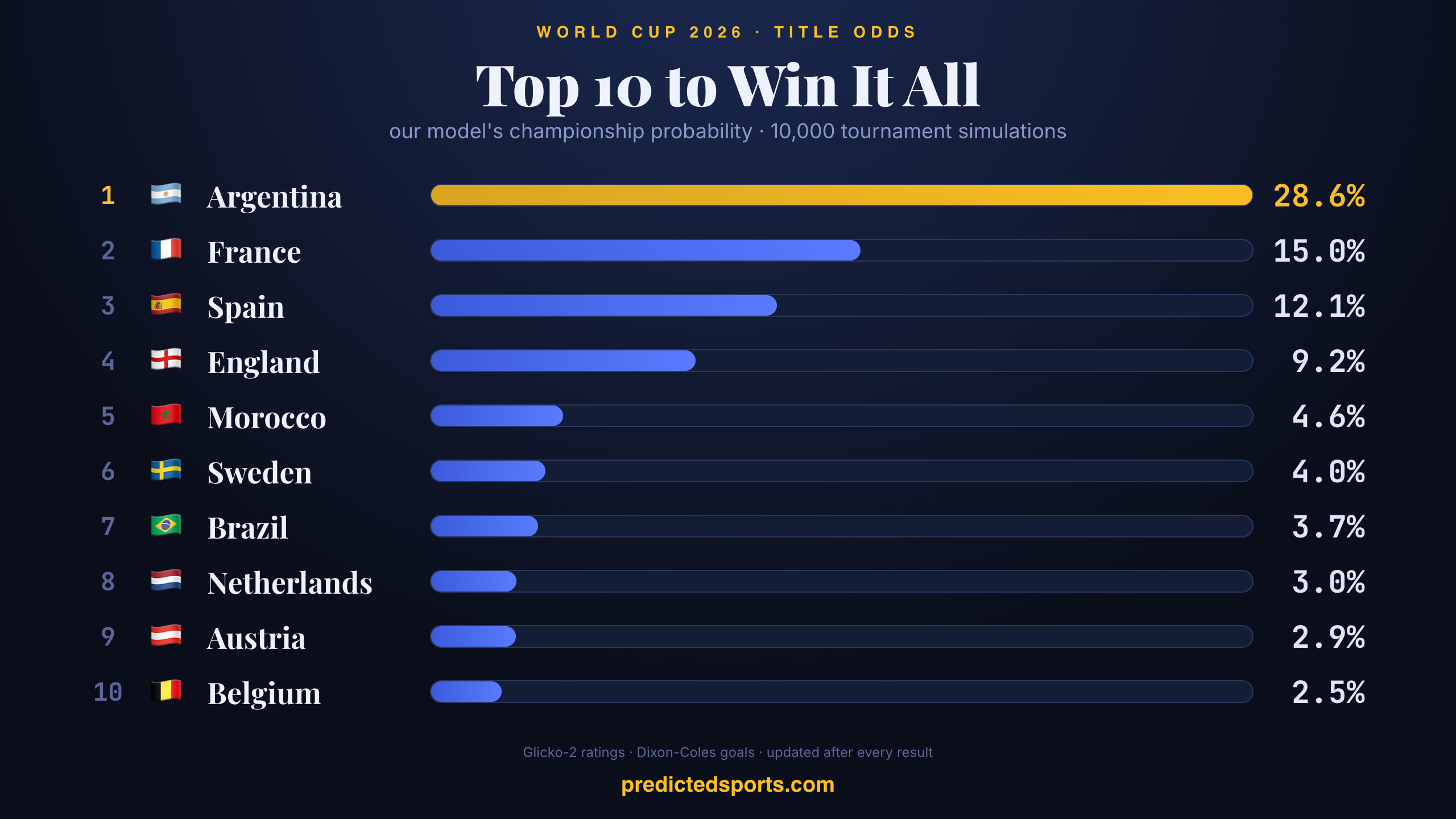
That is a real blind spot, so we built a layer that measures it directly. For every game, we pin the result to a win, a draw, and a loss, then re-run the whole tournament ten thousand times for each, and watch how far a team’s chances of going through swing between those outcomes. A big swing means the ninety minutes decide their fate. No swing means they are already safe, or already out, and the result is a formality. We can now put a number on how much a match means before a ball is kicked.
Run it on today and everything lights up, because nobody in Groups K and L is safe yet. Panama against Croatia is the starkest: both lost their openers, and the loser is all but eliminated tonight. Win or bust, for both. Portugal have to answer a shock opening draw against DR Congo or risk their whole tournament. England are already in strong shape but are really playing Ghana for seeding, for the side of the bracket they land on. These are games with weight on them.
What’s coming, and why it gets quiet
Now the other side of it. Once the final round begins, a lot of that weight disappears, and faster than you would think. Two teams go through from every group, plus the eight best third-place teams across the twelve. Add that up and finishing third is usually good enough. The jeopardy drains out of the last round, because so many teams are already safe before they play.
So we are about to get a run of games that, in the standings, simply do not matter. The United States against Turkey looks like one where neither result changes much for either side. Argentina will not need to get out of second gear. France and Norway, both already through, would each happily take a draw. There will be exceptions worth watching, Brazil will want to beat Scotland to avoid the Netherlands in the next round, and Scotland will take a draw to guarantee their place, so that one has a real edge to it, but the talent gap is wide. It is a strange feature of this format, and rare in sport generally, to line up a full slate of fixtures where half of them are settled in advance. You still have to come through a gauntlet of the best teams on earth to win the thing. You just do not have to try very hard to reach that gauntlet.
For the next couple of days, alongside the picks, we are going to grade each day’s games on exactly this: how much they actually mean to the two teams on the field. The model will tell you who should win. We will tell you whether anyone should care.
Today’s picks
Four games, and our read on each.
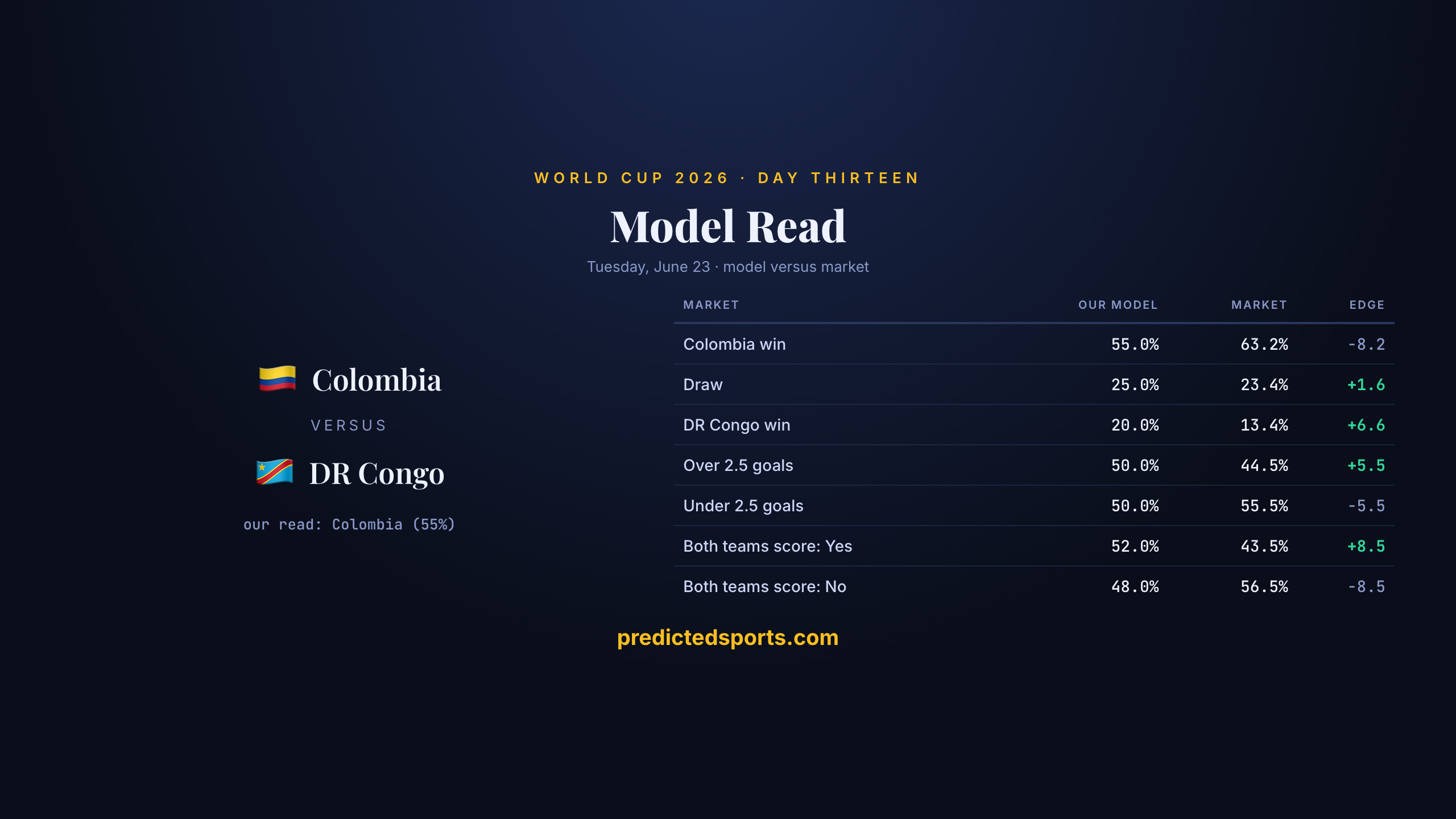
Colombia against DR Congo is the better of the Group K pair. Colombia opened with a confident 3-1 over Uzbekistan and we make them clear favorites at 55 percent, but DR Congo earned a hard-fought 1-1 draw with Portugal and will sit deep and counter, so this is no walkover. We have it close to even on goals, right around a 50 percent chance of going over 2.5.
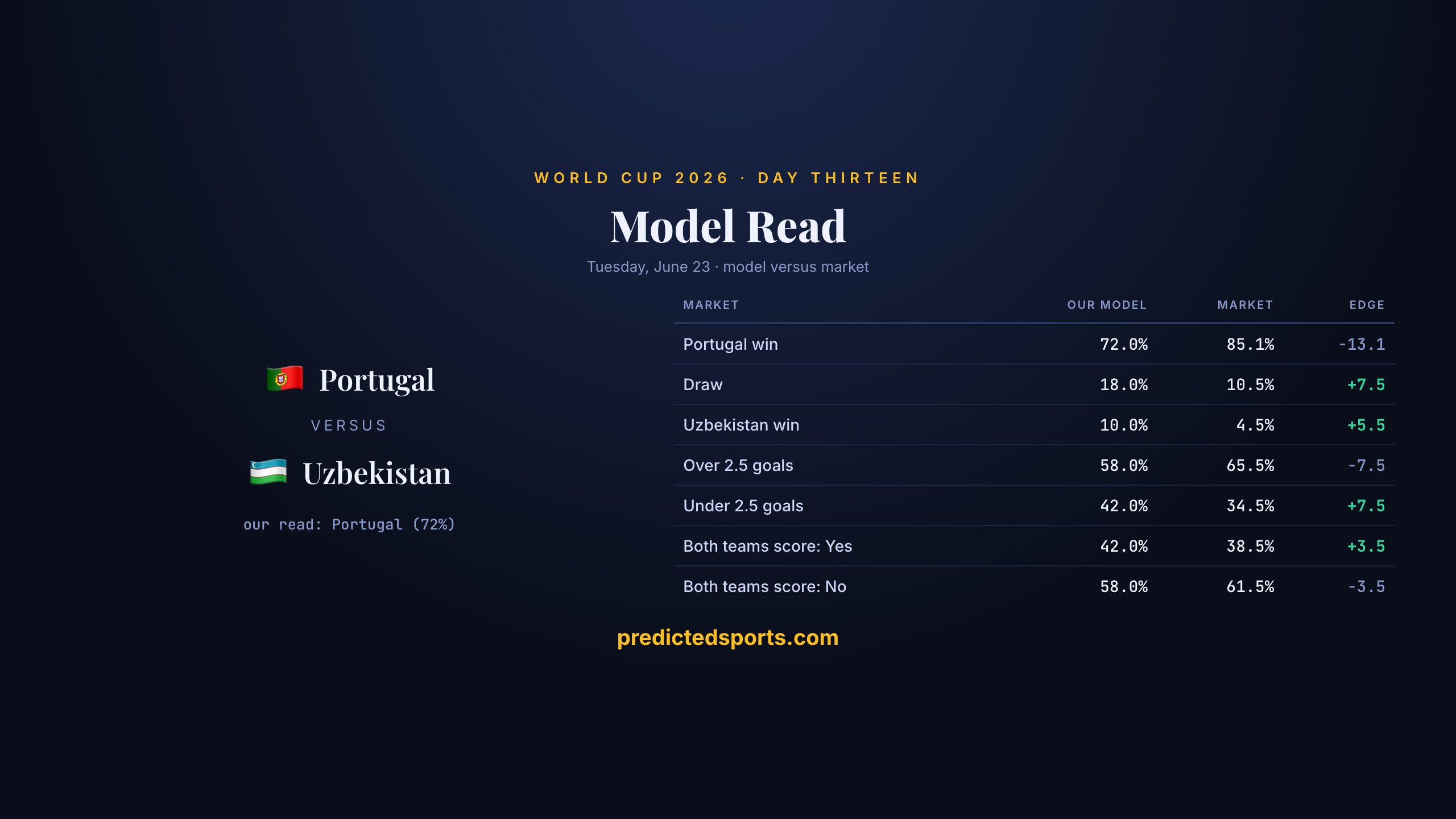
Portugal against Uzbekistan is the most lopsided on the board. After that shock opening draw, Portugal simply have to win, and we make them 72 percent to do it against an Uzbekistan side that struggled with Colombia. The goals should come once Portugal find the opening, with the over a shade ahead at 58 percent.
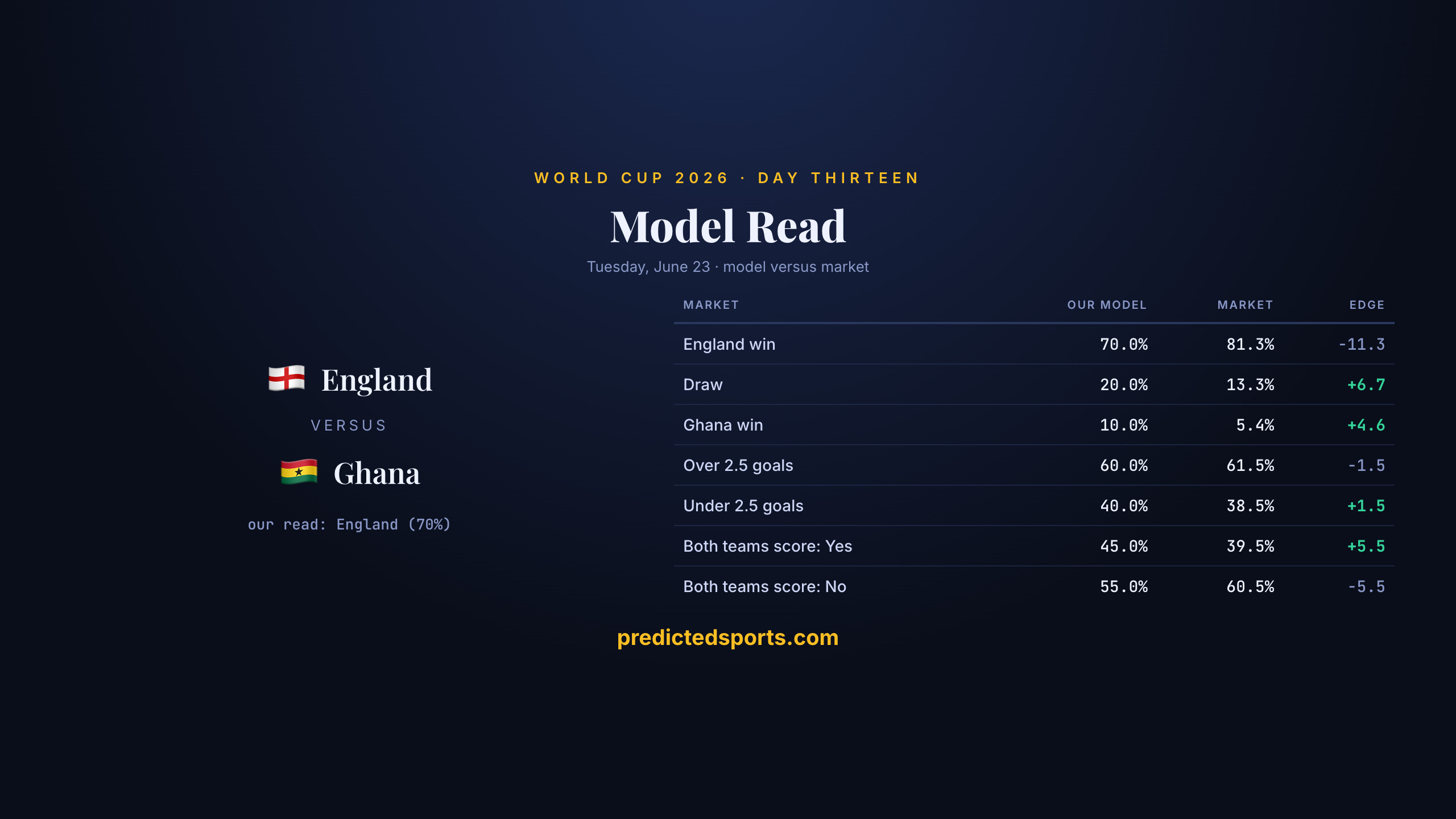
England against Ghana pairs two sides who both won their first game. We have England at 70 percent, carried by the attack that put four past Croatia, but that same shaky defense keeps Ghana live, and with Thomas Partey back in midfield this is more awkward than the gap suggests. Over 2.5 sits at 60 percent.
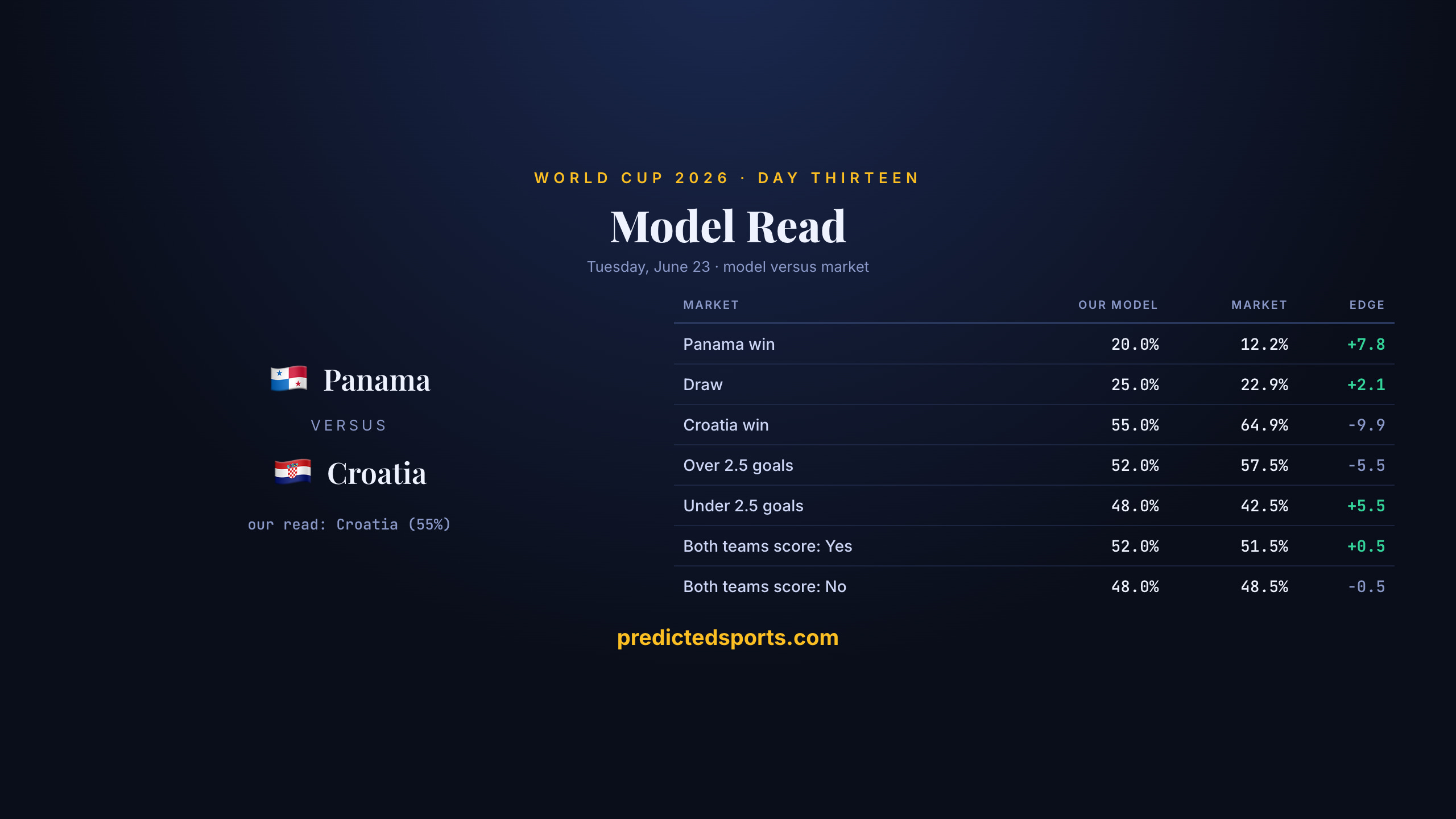
Panama against Croatia is the one with real jeopardy. Both lost their openers, so the loser is all but gone tonight. We lean Croatia at 55 percent on the strength of their midfield, but their back line wobbled badly against England, and a Panama side that is organized and quick on the break can punish it. We still give Panama a live 20 percent, with the draw at 25.
More tomorrow.